Patrick: I would like to welcome readers to this special edition of At the Scene of the Crime! This blog was started when I wanted to vent my fury over the abysmal book by George Baxt, The Affair at Royalties. I had written an online rant about the book’s failings and was so furious about them, I sat down and created a video thoroughly bashing it. (I still attend group therapy and hope to get over it someday.) Needless to say, I come across as rather “shouty” and I consider the video far from my finest review. However, I got relatively positive feedback, and soon enough, I had created this blog and was posting in it regularly. Things were going well and I had just about forgotten about George Baxt...
Until, for his “Q” entry for the Alphabet of Crime Fiction, Sergio (from Tipping My Fedora) wrote about Baxt’s A Queer Kind of Death. Not only did he praise the novel, he gave it five fedora tips! I was stunned to even see a positive take on Baxt, and it was so well-written I wrote the following in my comment: “The book I read was atrocious in every way- you have now successfully made me doubt my conclusion that Baxt had no talent.” The disagreement was an interesting one which immediately guaranteed my readership of Sergio’s blog.
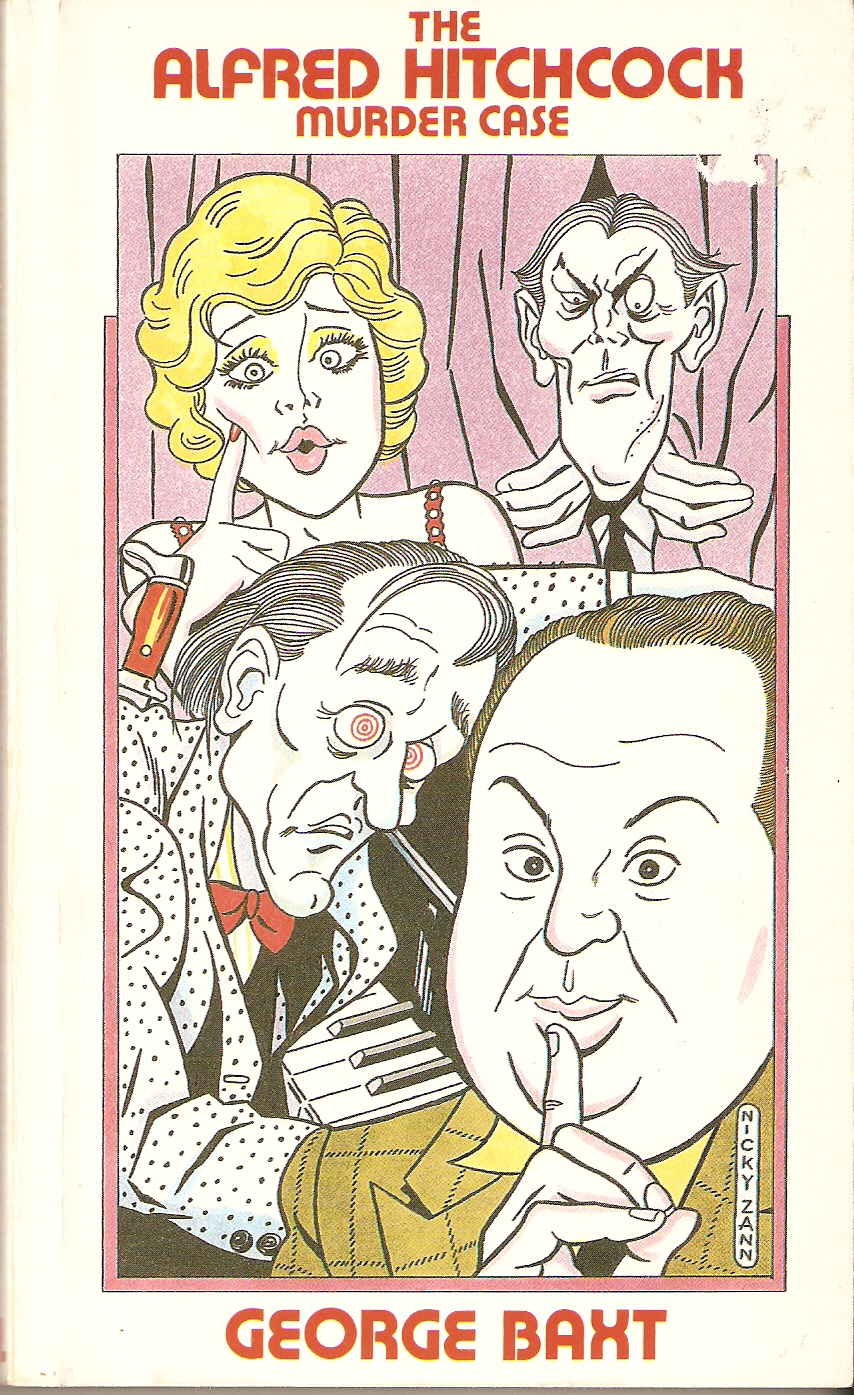
And then I had an idea: as we saw Baxt’s work from two different vantage points, why not read a book of his together and collaborate on a crossover review? I asked Sergio to contact me, pitched the idea (which he liked), and we selected a book: The Alfred Hitchcock Murder Case.
Now what motivation could I possibly have had for returning to the work of an author whose book I thoroughly despised? Quite simply: curiosity. I was curious what people like Sergio or William DeAndrea saw in Baxt to give him such positive appraisals. After all, it’s quite possible The Affair at Royalties was his The Hungry Goblin or Elephants Can Remember. So I decided to give Baxt another shot, trying to cast aside the prejudices of my experience reading The Affair at Royalties. And who knew? Perhaps I’d enjoy it…
Thanks for joining me today, Sergio!
***
Sergio: Buon giorno Patrick,
it's great to be here and thanks very much for having me on your splendid blog - despite my fondness for Baxt! This was a great suggestion of yours and between us we should be able to debate the pros and cons of the author's approach to life, the movies, literary crime and crimes against literature (not necessarily in that order). We've deliberately chosen to stay away from A QUEER KIND OF DEATH and its sequels as it seemed more profitable (and more fun) to pick one that neither of us had read before. THE ALFRED HITCHCOCK MURDER CASE certainly fits the bill - it's the second of Baxt's 'celebrity sleuth' series which combine actors, writers and filmmakers with fictional crimes. The approach is not too dissimilar from Stuart Kaminsky's Toby Peters series except that the real person becomes the actual detective. And Alfred Hitchcock, the self-styled 'master of suspense' seems a likely candidate for this kind of fictional treatment given his love of thrillers about an innocent man on the run (and personal publicity).
The book begins in Germany in 1925 where 'Hitch' and his fiancée Alma are working on THE PLEASURE GARDEN, his directorial debut. The tight production schedule gets interrupted however when the script girl is found dead in the shower, knifed to death ... hmmm, sounds familiar ...