Showing posts with label movie. Show all posts

Monday, November 17, 2014

Gone Baby Gone

Nick and Amy Dunne have been married for five years. On the day of their anniversary, Amy suddenly goes missing. Nick returns home to find evidence of a struggle, and immediately calls the police. Foul play is suspected, and before long, the media decides to publicly crucify Nick on the charge of murder, lack of a corpse notwithstanding. Is Nick truly a sociopath as the media declares, or is he simply handling the situation awkwardly, as best as he can?

This is the plot of the movie Gone Girl, based on the smash-hit novel by Gillian Flynn. Though the plot may seem rather conventional, the story is very cleverly structured, combining the main plot with excerpts from Amy’s diary. The picture the diary paints is one of a marriage which starts as a fairy-tale romance, but with financial troubles come hard times, and before long the relationship is strained almost to a breaking-point. Yet the story that Nick tells is a very different one. This forms something of a he-said-she-said plot which is easily one of the most interesting things about Gone Girl.

Tuesday, August 05, 2014

Murder is Hard Work

Nick, Dale, and Kurt are very good friends with something in common. They all work for absolutely terrible bosses. Nick works for David Harken, a sadistic sociopath who enjoys manipulating his employees and demonstrating the power he yields. Dale works for Dr. Julia Harris, a dentist who sexually harasses him, despite the fact that Dale is happily engaged and planning to get married. Kurt used to have a great boss, but when he died, his cocaine-addicted son Bobby took over the business and is set to ruin it with his paranoid schemes for milking every last cent out of it.

One night, the trio of friends begin to fantasize about killing their employers, and before long, they’ve decided to go through the harebrained scheme. To pull it off, they decide to find a hitman, and thus launch the series of events chronicled in the 2011 comedy Horrible Bosses.

Friday, January 17, 2014

Guest Post: Top 5 Film Adaptations

I have never featured a guest post on this blog, but there's a first for everything. And today, it's the first time I'm featuring a guest post. The author of this post is Kate Voss, whom you can follow on Twitter at this link. Kate has written a post on the Top 5 Film Adaptations within the crime genre. Although I would have approached such a post differently, I think this is a good post to get the conversation on film adaptations started. And, quite frankly, shouldn't the idea of a guest post be to give readers something a bit different to read than usual? So, without further ado from me, please welcome Kate to the blog.

 *   *   *   *   *   *

Sometimes the blood, sweat and tears that goes into writing a well-written, well-received book is depicted and reproduced beautifully into a feature film. Most often, however, we lose the imagination, characterization and plot development of the original written material. When it comes to mystery and crime novels, there is a rare group of films that capture the eeriness and thrill of a well-written book, and instead rely on the gore and shock-value, or sometimes just play out like a never-ending script.

In celebration of those film producers and directors who took a crime or mystery novel and actually got it right, I have presented a list of the 5 best film adaptations of all time.

Best Adaptations:
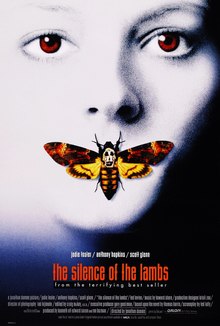
The Silence of the Lambs (1991)


This film was based on the 1988 novel by Thomas Harris which was the sequel to Harris’ 1981 novel, Red Dragon. Both books feature the infamous Dr. Hannibal Lecter, a cannibalistic serial killer who at times prepares gourmet meals with human flesh.

In the 1991 film adaptation, Anthony Hopkins gives a chilling performance as Hannibal, while Jodie Foster takes the role of Clarice Starling, a young F.B.I. trainee who seeks his help to solve a case. The film helped redefine the meaning of a thriller and serial killer and was able to capture the frantic tension that Harris imagined in the novel. It won an Academy Award in all the top five categories: Best Picture, Best Actor, Best Actress, Best Director, and Best Writing, and is considered a horror masterpiece.

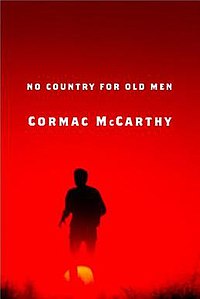
No Country for Old Men (2007)


Based on the 2005 crime novel by the American author, Cormac McCarthy (who also is responsible for All the Pretty Horses and Blood Meridian), No Country for Old Men tells the story of an illegal drug trade gone wrong near the US-Mexican border, and a psychopathic hitman who seeks revenge. It is a hunter-becomes-the-hunted story that dramatizes McCarthy’s eerie prose shockingly well. We see Javier Bardem play a role wildly contradictory to his suave Eat, Pray, Love character.

The film won four Academy Awards, including Best Picture, has become the biggest box-office hit for the Coen brothers to date, and was the first Oscar-winning film to be edited using Final Cut Pro. The popular film is currently streaming on DirecTV and Netflix.

The Girl with the Dragon Tattoo (2011)
 

Based on the 2005 crime novel by the Swedish author Stieg Larsson, Girl with the Dragon Tattoo was the first of the Millennium series trilogy. The story follows journalist Mikael (played by Daniel Craig) and a computer hacker Lisbeth (Rooney Mara’s breakout role) as they investigate the 40-year-old disappearance of a woman.

Although the 2011 adaptation of the novel was not the first, being beat to the punch by the 2009 Swedish rendition, it was a brilliant representation of Larsson's work. The chemistry between Craig and Mara was bewitching. The film won an Academy Award for Best Achievement in Film Editing.

The Big Sleep (1946)


This film is based on the 1939 crime novel by Raymond Chandler and featured Detective Philip Marlowe. In the 1946 original film adaptation (much better than the 1978 adaptation) Humphrey Bogart perfectly captures the essence and complexity of the Detective Marlowe story. The film talks Chandler's storytelling and makes a brilliant film about the process of a detective, rather than what is solved.

The film was deemed “culturally, historically, or aesthetically significant” by the U.S. Library of Congress and still remains one of Bogart’s greatest films.

The Maltese Falcon (1941)


Yet another film starring Humphrey Bogart, The Maltese Falcon is based on the 1930 detective novel by Dashiell Hammett, originally published in the pulp magazine, Black Mask. While the story has been retold countless times in the cinema and the stale attempts at recreating the main character, Sam Spade, the 1941 adaptation was the most successful. The character of Sam Spade is credited as being the structural figure for future private detective genres, borrowing from his detachment and observational skills.

The Maltese Falcon has been named as one of the greatest films of all time by Roger Ebert and also Entertainment Weekly.

So, while some film adaptations may flop, destroying the original creative environment constructed in the original book, there are a select few who made authors proud and tell the story as it should be told. What are your favorite film adaptations?

Saturday, January 26, 2013

The name's Parker. Just Parker.

Anyone who follows my blog regularly knows that I am a very big fan of the late, great Donald E. Westlake. I enjoy his work when he is writing a comic crime caper, and I equally enjoy it when he writes a dark, gritty tale. Parker is one of his most famous characters. Writing under the name “Richard Stark”, Westlake created an utterly amoral thief named Parker, who doesn’t kill people not out of any moral notions, but because it makes for a nastier legal mess. Casual murder is not his style, but if he has to do it, he will kill anyone to get his way. His actions are dictated purely by logic, not by emotions of any sort. And somehow, Donald E. Westlake took this utterly amoral figure and made him into a fascinating anti-hero.

We’ve seen Parker on screen several times. Point Blank is still perhaps the greatest adaptation of a Parker novel ever filmed, starring Lee Marvin as “Walker”. Payback starring Mel Gibson as “Porter” was also pretty good, although the (shorter) director’s cut is far better than the original theatrical version. One thing has been common in every adaptation – nobody has been allowed to use the name “Parker”. And so when I found out about the new film Parker, I got excited. Someone was finally allowed to use Parker’s name??? What sort of sorcery was this? And then I found out the movie was due to be released in October before being pushed back to January, which isn’t always a good sign. So what is this movie? A gem to be embraced, or a crappy movie that’s being flushed out with the rest of the trash this time of year?

Wednesday, January 02, 2013

Jack Reacher

I’ve never read the books of Lee Child. So I couldn’t share the outrage of fans when it was announced that Tom Cruise would play the character Jack Reacher in the new movie of the same name. I can sort-of understand the frustration of some, but I cannot empathise with it. In fact, I didn’t even know who Jack Reacher was when I first saw the trailer for the movie, a trailer that made me laugh out loud. Tom Cruise as some badass “I’m-not-a-hero” antihero, obviously looking to reboot his action star career and possibly feed his ego? Who would want to watch that? But then I found out who Jack Reacher was, and the more I found out about the movie the more curious I became. Usually, I read a book before seeing the movie upon which it is based, but I decided to make an exception in the case of Jack Reacher. Boy, am I ever glad I did!

I have no idea what kind of books Lee Child writes. For all I know, they could be as preposterous as The Da Vinci Code. But if his work is even half as entertaining as Jack Reacher, I want to read these books! Okay, so the plot: a sniper named Barr takes out five random people, is quickly arrested and is going to be prosecuted. But Barr refuses to admit his guilt, and will only write down the words “Get Jack Reacher”.

Wednesday, December 19, 2012

Why Couldn't They Make it Better?

Although the excitement I had initially felt upon viewing the trailer was gone, I was simply too interested to not see Hitchcock, a new movie starring Anthony Hopkins and Helen Mirren as legendary director Alfred Hitchcock and his wife Alma Reville. I had major fears about this film, having read the book on which it is supposedly based, Alfred Hitchcock and the Making of Psycho by Stephen Rebello. Yes, you read that right. Supposedly based. Because I did not see a film equivalent of Rebello’s book. What I saw was speculative fiction that didn’t even have the guts to be entertaining enough to justify my $10.

But I’m getting a bit ahead of myself. What I just wrote is unkind and unfair to the movie, and I could give it a humiliating review, but what good will that do? It’ll make me seem like an immature loser, and I’m sure Anthony Hopkins won’t lose any sleep over it. The above sums up my overall opinion for those of you who have never read Robert Bloch’s Psycho or who have never seen the Hitchcock film. If you are one of those people, I have two things to say to you:

(1) Shame on you! Go watch it now!
(2) Turn away now, because the rest of this review will assume you are familiar with the story. It’s too good for me to spoil it to anyone unfamiliar with it.

Thursday, November 29, 2012

Dr. Hollywood: or, How I Learned to Stop Worrying and Love Misleading Speculative Fiction

Alfred Hitchcock and the Making of Psycho by Stephen Rebello is the book on which the upcoming film Hitchcock is based. Starring Anthony Hopkins and Helen Mirren as Hitch and his wife Alma, respectively, I was very excited when I saw the first trailer for the film. I then made the decision to read Rebello’s book before seeing the movie. That might have been a mistake… but more on that later.

As the title of Rebello’s book might suggest, this is an overview of the making of Psycho. Stephen Rebello begins at the most logical place: with a brief overview of the gruesome Ed Gein murder case. If you have no idea who Gein was, consider yourself lucky, because this might well be the most heinous killer I have ever heard of. The things he did with the corpses of his victims made me sick to the stomach, and I have no idea how I managed to get through such a brief summary of the case; I can’t imagine what a more in-depth look at the crime would read like.

Friday, July 20, 2012

The Dark Knight Rises

As I begin writing this review, it is 3:23 AM Eastern Standard Time. I got back from the movie theatre minutes ago, having seen The Dark Knight Rises at its midnight premiere in IMAX format. This for me is a first on a few levels: it’s the first time I’ve ever gone to see a movie at midnight, and it’s also the first IMAX movie I’ve ever seen. It’s also the most exciting movie I’ve gone to see in a while. I have awaited The Dark Knight Rises ever since I saw The Dark Knight. I looked forward to this movie more than The Avengers, more than Inception, more than The Dark Knight itself. So does the movie deliver or does it fall flat?

The Dark Knight Rises clocks in at an epic 2 hours and 45 minutes, but the movie doesn’t feel like it’s taking that long. There’s a lot of story to cram in, and although the first half hour or so is mainly build-up, when the action kicks in it does so with a vengeance, and everything builds up to the most spectacular conclusion I’ve ever seen in cinemas… and I’m choosing my words carefully.

Saturday, May 05, 2012

The Sequel to the Curious Case of the Unnecessary Butchering of Murder on the Orient Express

This review is something of a follow-up to my sarcastic play-by-play commentary on the atrocious 2001 TV adaptation of Murder on the Orient Express. I wrote many of these comments a long time ago (at least in Internet minutes) when I first saw the episode in question. I have revisited some of these thoughts and edited some. Please let me know if you enjoy reading these articles, and if there's interest, the next time I do one of these I will attempt to prove that Suchet's version of Appointment With Death is really a thinly-veiled remake of The Mummy.

Murder on the Orient Express has been an episode looked forward to by Poirot fans for a very long time. And about the first 18 minutes are as close as you can get to a total mess. The movie begins with an uninspired and boring case to account for Poirot’s presence in Istanbul, which is extremely repetitive in insisting the perpetrator lied (How inconsiderate!). All Poirot does is shout about how much dishonour this man has brought—it’s basically a 1930s way of saying “You’re a disgrace to me, you’re a disgrace to your country, and you’re a disgrace to your momma!” It gets very boring, and the actor decides to commit suicide, which finally gets Poirot to shut up and look shocked for a few seconds. Unfortunately, he doesn’t stay silent for very long…

Saturday, April 28, 2012

No, the murderer doesn't live here... try number 21 in Paris

Yesterday, I was initiated into the Stanislas-AndrĂ© Steeman Appreciation Club when I read L’Assassin habite au 21 (The Murderer Lives at No. 21) for the very first time. I marvelled at the plot construction, the meticulously fair clueing, and the brilliant ending. But why am I bothering you with this summary? Go and read my review for yourself—I can still feel the enthusiasm dripping from my words. In fact, instead of starting a new mystery novel, I spent much of my reading time yesterday re-reading several passages from the book one more time… and my appreciation only deepened.

Naturally, it was only a matter of time before I got around to reviewing the film adaptation. It was released in 1942 during the Nazi occupation of France. American films were banned and so the French cinema was pressed to give its audiences quality films—and thus, Henri-Georges Clouzot (sometimes called the French Hitchcock) was put into the director’s chair for his first major film, adapting L’Assassin habite au 21 with the help of the book’s author. And that’s about all I’ve been able to piece together—I’m sure more material is available on this film’s genesis but I haven’t got the ability to go out and do more research. Instead, I’d like to discuss the process of adaptation: what has translated well? What doesn’t work? What unique touches does Clouzot bring to the film as the director? And so on…

Sunday, February 05, 2012

The Curious Case of the Unnecessary Butchering of Murder on the Orient Express

Yeah... That was my reaction too.
A new post from Bill at Traditional Mysteries inspired me to dig through my old reviews and take a look at adaptations of classic detective stories that themselves fall into the “alternative classic” category. There have been many bad adaptations of Hercule Poirot and Miss Marple— but I contest that none have ever approached the travesty that is Murder on the Orient Express, a 2001-TV movie starring Alfred Molina. To prove it, I’ve adapted and expanded my old review of this atrocity.

Basically, for those of you who were lucky enough not to see this version of Murder on the Orient Express, I will sum it up as best as I can. Those who have seen it won’t find anything new in this post, but you might want to read it so that you know that I feel your pain. Obviously this post contains spoilers.

Friday, January 20, 2012

Blast from the Past

What on earth was I thinking when I wrote an all-too-brief overview of Jean-Claude Van Damme’s career and then proceeded to a review of Timecop (1994)? All will be explained today, and the idea behind this (very atypical) review can be summed up in two words: Hot Fuzz.

I remember seeing commercials for Hot Fuzz (2007) when it first came out, but I never went to see it in theatres. I eventually did see it and loved every moment of it. It is an unusual film in that it manages to successfully mesh two genres and parody them both. One genre is the mindless action romp, such as Bad Boys II or Point Break. (In this regard, Timecop may not have been the best movie to review. However, it fit the theme of the blog far better than, say, Hard Target.) What is the other genre, you may ask? Why, none other than the traditional country-village mystery!

Wednesday, January 18, 2012

Meaningless, silly, senseless... in a word, priceless!

I have a confession to make. I love action movies, especially all those movies from the 80s and 90s starring Arnold Schwarzenegger, Sylvester Stallone, or any one of their rivals with the general exception of Steven Seagal. Dumber and derivative they may be, but I have plenty of fun watching some creative action, well-choreographed fights, and terrible acting. But above all, my guiltiest pleasures are watching Jean-Claude Van Damme movies.

Thursday, December 22, 2011

Reliving Childhood

I have always had a soft spot for HergĂ©’s The Adventures of Tintin. I more or less grew up with the comic books; they were one of the many things that helped me to learn French. Tintin’s adventures are like those of Indiana Jones— there’s often an element of mystery, but there’s plenty of action that could have come right out of a 1930s serial movie. When I learned one of my all-time favourite directors, Steven Spielberg, would be adapting Tintin, I was ecstatic— Spielberg, who directed such classic as Raiders of the Lost Ark, seemed the perfect choice. Unfortunately, I saw the project delayed time and time again—this studio dropped out, this actor left the project, this strike interferes with the script-writing process… The film seemed cursed…

This summer, while I was at the airport in Paris, I went to the bookstore and to my delight found several French mysteries. Then, as I was about to walk off, I noticed another book— this one was about Tintin, specifically the historical events and figures that inspired the various stories. I purchased the book and enthusiastically read it on the flight (as I am unable to sleep on a plane the second it leaves the ground). Thanks to that book I learned just how the idea for a Tintin film struggled even before Steven Spielberg committed himself to the project in the early 80s. Spielberg was a godsend for this series, for he vowed to stay true to HergĂ©’s vision.

Now the final product has arrived. It was opening night here in our local theatre on the 21st, and I absolutely had to go see a childhood icon of mine on the big screen. I even paid some more money to see it in 3D, a technology I’m often disdainful of, for the simple reason that the 2D version was not being shown just yet. Has Spielberg kept true to his word? Is this the fun, adventurous Tintin I remember from my childhood or does it resonate hollowly now that I’ve gotten older?

Monday, December 19, 2011

Your move, Professor...

When Sherlock Holmes came out two years ago, I was sceptic. I criticized the trailer for marketing yet another dumb action movie that capitalised on an infamous creation. But as the reviews poured in, I found them surprisingly positive, finally relenting and going to see the film for myself. To my delight, I found that the movie was an intelligent and entertaining film with a very modern take on Sherlock Holmes, hardly the all-out action flick the trailer represented. I solemnly ate my words and enjoyed the movie enormously. My reviews were extremely positive— I even made it into The American Culture with my review, the only time that’s ever happened.

I was all for a sequel… but when the trailers for Sherlock Holmes: A Game of Shadows appeared, doubt crept back into my mind. These trailers were even worse than those for the first film, showing disparate elements covering everything between Sherlock Holmes cross-dressing, Lisbeth Salander as a gypsy, and homicidal train employees using a machine gun in an assassination attempt. It seemed like this film would be a total disaster. Besides, let’s be honest: A Game of Shadows is one of the dullest and most uninspired titles of all the Sherlock Holmes films ever made.

Thursday, September 08, 2011

Face-Off

Bon Cop Bad Cop is a very Canadian film. It is a mystery, a thriller, a cop/buddy movie and a comedy rolled into one, and it has two very Canadian things at its core. The first is the noble pastime of hockey, a truly Canadian sport. The second is the relations between English and French Canadians, which have not always been the most cordial. In October of 1970, it escalated into violence when members of the Fédération de libération du Québec (FLQ) kidnapped James Cross and murdered Pierre Laporte. It was the only time in Canadian history that the War Measures Act (ie marshal law) was imposed during peacetime.

There are a few reasons for this (all too brief) digression on Canadian history. Like I said, it’s important to understand that French Canadians and English Canadians have not gotten along well in the past, as this plays a key role in Bon Cop Bad Cop. But my other motive is simply a love of history in general, and the October Crisis holds a strange fascination for me.

Monday, August 29, 2011

What's your favourite scary movie?

Though horror movies are far from my favourite genre, I love the Scream series of movies. These films take a look at the horror film in a delightfully satirical, tongue-in-cheek way: the characters expound on the rules of the horror movie, proudly avoid the same stupid mistakes, and then turn around and make new stupid mistakes. This layer of satire is what makes the first two films, Scream and Scream 2, stand up above your average violent slasher flick. While still violent (and rather scary) movies, they have a fun habit of mocking themselves in the process and it makes for great watching.

Something happened by the time Scream 3 rolled along, however. The series became lazy and started to come up with outlandish situations… but it took itself seriously. The charm of the first two movies was the characters’ self-awareness, but in Scream 3, these scenes were very few, far between, and not nearly as successful. There are some moments in the movie—like a very good chase through a movie set, or a cameo by Carrie Fischer in which she takes a fun crack at herself and the character she played in Star Wars—but overall, Scream 3 fell flat, feeling like little more than an attempt to cash in.

Tuesday, July 12, 2011

The Adventure of the Magical Murderer

I stumbled over the film Detective Dee and the Mystery of the Phantom Flame by accident, as I was looking up an adaptation of Robert Van Gulik’s The Haunted Monastery. The film seemed okay, but the trailer rather turned me off. It didn’t seem like my kind of movie. Well, I was wrong… but I was also right. This movie is a strange mixture of stuff I really like and stuff I don’t care for at all.

The idea for a plot is a really darn good one. As Wu Zetian prepares to be declared Empress, a series of spontaneous combustions occur that threaten to ruin the coronation. Detective Dee is released from prison, where he was thrown 8 years before for treason, and he is ordered to track down the criminal and serve justice.

Tuesday, June 14, 2011

There's no place like home...

The Carstairs kids (left to right): Archie, April, and Dinah

It wasn’t that long ago that I read Craig Rice’s brilliant novel Home Sweet Homicide for the very first time. It is an absolute masterpiece, with a brilliantly complex plot, extremely funny situations, characters that captivate your imagination, and all the fun of a Rice novel with chocolate malts replacing the booze.

Imagine my joy then, when I found out there was a film adaptation (that information being in the introduction to the Rue Morgue Press edition). Filmed in 1946, Home Sweet Homicide is a wonderfully fun movie, and it is a genuine shame that it hasn’t been treated well over time. The print I got a hold of had an inconsistent quality and two or three times, a few seconds of film seemed to be missing… either that, or the director was fond of cutting to black for no reason at all for a few seconds too long. (I get the feeling the first explanation is more plausible.)